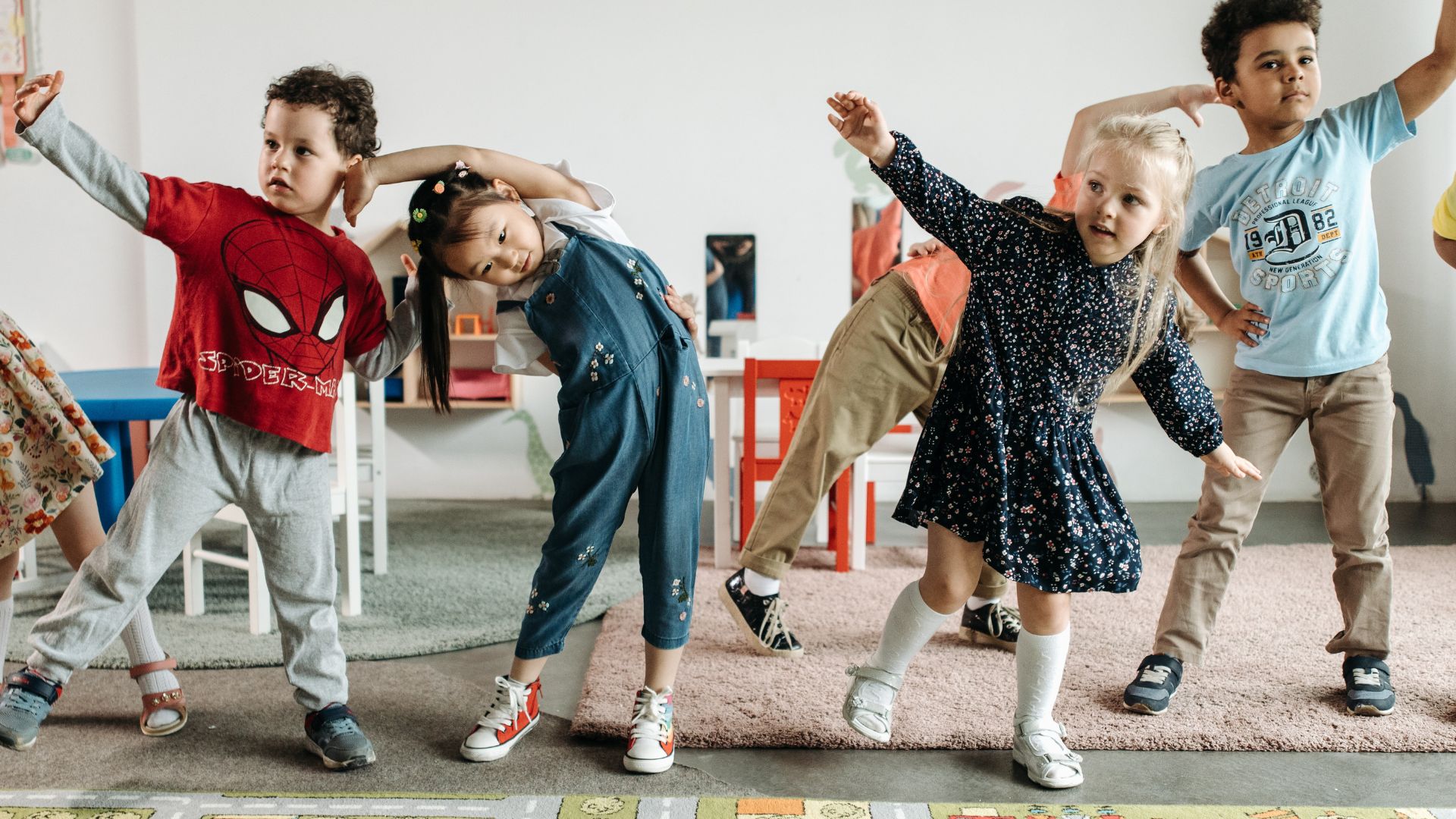
Did you know that a strong core is essential for your child’s learning and overall development? A weak or inflexible core can impair how the rest of the body functions, leading to poor concentration and negatively impacting a child’s learning ability. By helping your child build a strong core, you’ll ensure that their body functions at its optimal potential, improving concentration and aptitude for learning
What are your core muscles?
Paediatric Physiotherapist and Clamber Club Expert, Nicole Hilburn defines core muscles as, “the muscles that act to stabilise your spine and maintain posture – in broad terms, the muscles of your pelvis, hips, abdomen and lower back, as well as the shoulders.” 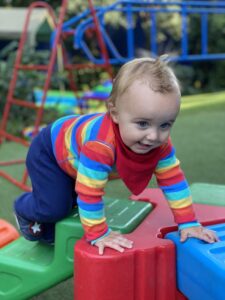
The muscles of the abdomen and back need to work together in order to stabilise the core. The more you move, the faster you move, the more stability you need from your core muscles to support you. “Your core muscles should allow you to carry out daily tasks with minimal effort and no strain on your body,” adds Hilburn.
Why are your core muscles important?
Your core muscles help to support your body and allow a child to use his/her arms and legs strongly and effectively. “Strong core muscles form the foundation for good posture, coordination and balance. All gross and fine motor skills rely on a stable core and so it makes sense that we encourage our children to get out there, get fit and exercise,” says Liz Senior, Occupational Therapist.
How does poor core stability affect learning and later sports skills?
A child who is sitting at a desk needs their core muscles to support them so that they are able to stay upright against gravity and use their eyes or hands effectively. “A child with poor core stability will be using other ways of keeping themselves up against gravity which are often ineffective and tiring, and will therefore either lose focus as a result, or their fine motor output will be poor,” explains Hilburn. 
When it comes to the sports field, children with poor core stability cannot use their arms and legs efficiently, or find other ways of compensating. They may experience poor coordination and fatigue as a result, making sports activities difficult and frustrating for them.
What are the signs of poor core strength?
- Poor posture such as rounded shoulders, pigeon-toed feet, and leaning on the insides of the feet
- Heavy movements when running, jumping and hopping
- Signs of trying to find stability when having to stand or sit still
- Poor gross motor skills and clumsiness – may fall often
- Difficulty climbing, and playing on unstable equipment such as bikes
- Tires easily when walking for a longer period of time, and may ask to be picked up
Fun games and activities which help to improve core stability:
Wheelbarrow walks
This is a great activity for trunk and shoulder girdle strength. Hold the child at the ankles, or if they struggle, then hold under the thighs. 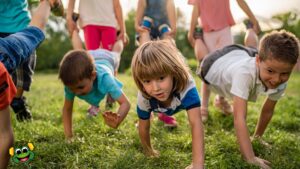
Try and go up and down the house passage or across the garden a few times. The tummy should not sag, and you should not be able to see your child’s shoulder blades sticking out – if either happens, hold under the thighs or closer to the body.
Bridge
This activity strengthens the trunk and shoulder girdle, and is fun for all ages. Get your child to make a bridge with his body by bending over backwards. Roll a ball underneath and see how long he can stay up for!
Drawing under a table
This is a great activity for shoulder girdle strength. Tape a piece of paper to the underside of a children’s table. Let your child draw whilst lying on his back!
Crab walks
Get your child to sit on the ground with his/her knees bent, the hands should be placed on the ground behind/ him/her, lift the bum off the ground to create an arch way. This activity strengthens the muscles of the back and pelvis. Just holding the position is also great – you can pretend something is walking underneath the bridge.
Throwing a ball
Get your child to throw a ball from above his head. He can also bash the ball back to you. Holding the arms up strengthens the shoulder girdle, and the muscles of the back.
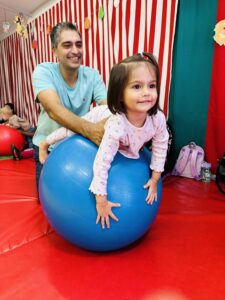 6. Gym Ball games
Lie on their tummy on the ball with hands on the floor to engage core muscles, lie on their back with feet on the floor to strengthen abdominals.  Lie on their side with one hand on the floor to target obliques, and roll over the ball from a tummy position to land on their hands, enhancing coordination and balance.
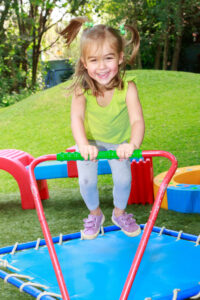 General strengthening activities:
- Swimming
- Climbing a jungle gym
- Monkey bars (from about 4 years)
- Fireman’s pole (from about 4 years)
- Jumping on a trampoline
When should you consult a physiotherapist?
A child who shows signs of poor core stability may benefit from a referral to physiotherapy when:
- Not coping with activities which are age appropriate at school
- Avoiding activities such as climbing on playground equipment or riding bikes
- Poor socialising skills due to an inability to keep up with peers
- Chooses more sedentary activities rather than running around or moves constantly and will not sit down for any length of time to do an activity
- Fidgets constantly
- Poor fine motor skills
- Cannot grade drawing skills – presses very hard, and uses an immature grip
- Possible poor speech
- Tires easily
A cluster of these signs and symptoms may indicate that a child has poor core stability. “Sometimes, extramural activities which are known to be good for strength are not enough, as a child who is weak will use compensatory strategies to do an activity, and overuses strong muscles, and underuses weak muscles,” says Nicole.
Therefore the extramural may not be strengthening the correct muscle groups, and one on one physiotherapy may be required to identify and strengthen the correct muscle groups.
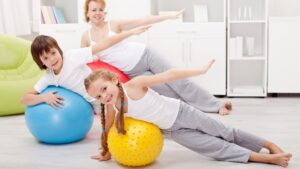 Incorporating core strengthening activities into your child’s daily routine can have a profound impact on their learning and overall well-being.
By focusing on building a strong core, you are setting the foundation for better posture, coordination, and balance, which are needed for both academic and physical activities.
Encourage your child to get moving, stay active, and watch as their concentration and learning abilities grow!
Check out our Kids Action Songs on our YouTube channel and join in the singing and moving activities.
Incorporate the actions into your movement rings to help kids develop strong core muscles.
STREAM our top x3 Kids Action Songs that support core strength:
- Tip Truck
2. Row your boat
3. Diddly dumpling
Click HERE on our Instagram account to see x5 core strength activities in action. We hope it will spark some inspiration!